
How to Help a Puppy Who Hates Being Left Alone
How to Help a Puppy Who Hates Being Left Alone
Being left alone is one of the biggest adjustments a new puppy faces. Some fussing in the first few weeks is completely normal, but for a smaller number of puppies the distress becomes intense enough to need real attention. Knowing the difference helps you respond calmly and early.
Normal Fussing Versus Separation Anxiety
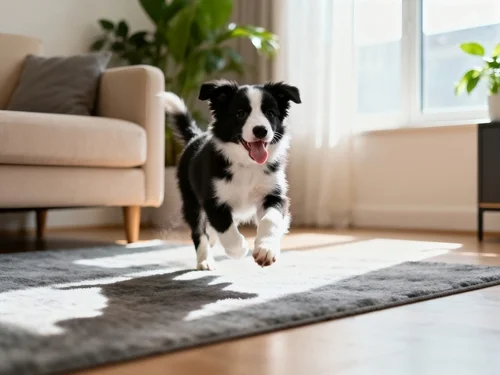
Most puppies whine or bark for a few minutes after you leave and then settle down, especially if they have had exercise and a chance to relieve themselves. Separation anxiety looks different, with nonstop barking or howling, drooling, pacing, destructive chewing at doors and windows, escape attempts, or accidents in a house-trained puppy that happen only when you are away. If the behavior continues for the whole time you are gone, it is more than ordinary adjustment.
Build Independence Gradually
Start with very short absences, even a minute or two in another room, and slowly increase the time as your puppy stays calm. Practice at home before you leave the house, and mix in short trips out of sight so being alone becomes ordinary. Give your puppy a comfortable crate or gated space and teach them to enjoy it with treats and chews long before you need them to stay there for hours.
Keep Departures and Arrivals Low-Key
Long, emotional goodbyes tell your puppy that leaving is a big deal, so give a calm cue, hand over a chew or a stuffed toy, and leave without ceremony. When you return, wait a moment until your puppy is calm before greeting them, and keep the greeting relaxed even if your puppy is bursting with excitement. Over time this teaches your puppy that your comings and goings are ordinary events, and that nothing about being alone is worth getting worked up over.
Provide Exercise and Enrichment First
A puppy who has had a walk, a play session, and a potty break is much more likely to rest while you are gone. Puzzle feeders, frozen chew toys, and safe chews give your puppy something to do besides worry, and keeping those toys reserved for alone time helps them stay interesting. A short, structured play session about twenty minutes before you leave works especially well, because it gives your puppy time to burn off energy and settle into a nap by the time the door closes.
Never Punish and Know When to Get Help
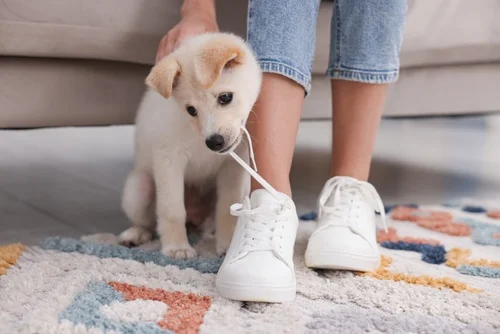
Chewed furniture and accidents are signs of distress rather than defiance, and punishment tends to make anxiety worse. Remember too that young puppies cannot hold their bladders for long, so avoid leaving them alone longer than they can manage. If symptoms continue beyond a few weeks, if your puppy injures themselves, or if the anxiety seems to be getting worse, talk with your veterinarian, who can rule out medical causes and refer you to a trainer or behaviorist.
Most puppies learn to be comfortable alone with patience and gradual practice. Start early, keep things calm, and ask for help sooner rather than later, and your puppy will learn that being alone is safe.